KARIN BY THE SHORE. Watercolor, Carl Larsson, 1908.
Karin stands thoughtfully in her beloved garden, gazing out over the water, hand to her cheek in her characteristic gesture. The flowerbeds are filled with blossoms, and in the kitchen garden, Swedish vegetables grow alongside French plants she brought from Grez-sur-Loing. With the help of the children and the estate’s men, she tends the garden. Each plant is chosen for both beauty and utility, and the vegetables become a welcome addition to the household. Here, Karin also finds a moment for herself – something rare in the large family.


PHOTO: Carl Larsson-gården, 1913.
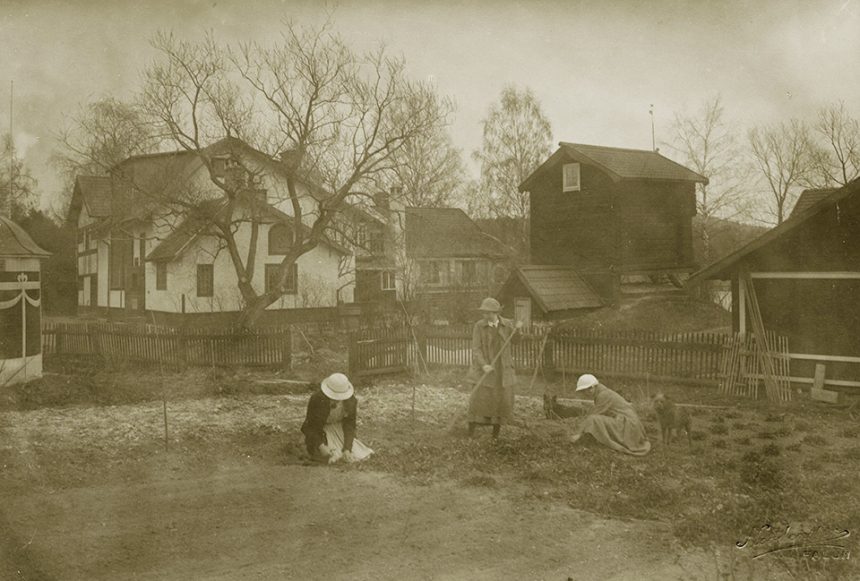
Spring work in the kitchen garden at Lilla Hyttnäs. Karin’s interest in cultivation was significant. Here, gardening work is underway. The group is planting, with two dogs as curious spectators.
As a passionate gardener, Karin’s vegetable plots are an important part of the garden. Everything from carrots and potatoes to peas and beans is grown here. The plants contribute to the household’s cooking and reflect her interest in a simple and self-sufficient lifestyle. Alongside edible plants, Karin cultivates herbs such as rosemary, thyme, and sage, used for their aromatic properties.
GARDENER ERIK. Watercolor, Carl Larsson, 1912.
Vegetables were grown abundantly at Lilla Hyttnäs. Karin managed much of the garden work but received help from Erik Kvarnberg, who is seen here digging in the kitchen garden. A few years later, Erik and his wife Hilma took over the farm at Spadarvet and settled in the house now known as “Kvarnberg’s Cottage.” In the background, the Main House, the Källan pump house, the Härbret granary, and the Bagarstugan bakery are visible.
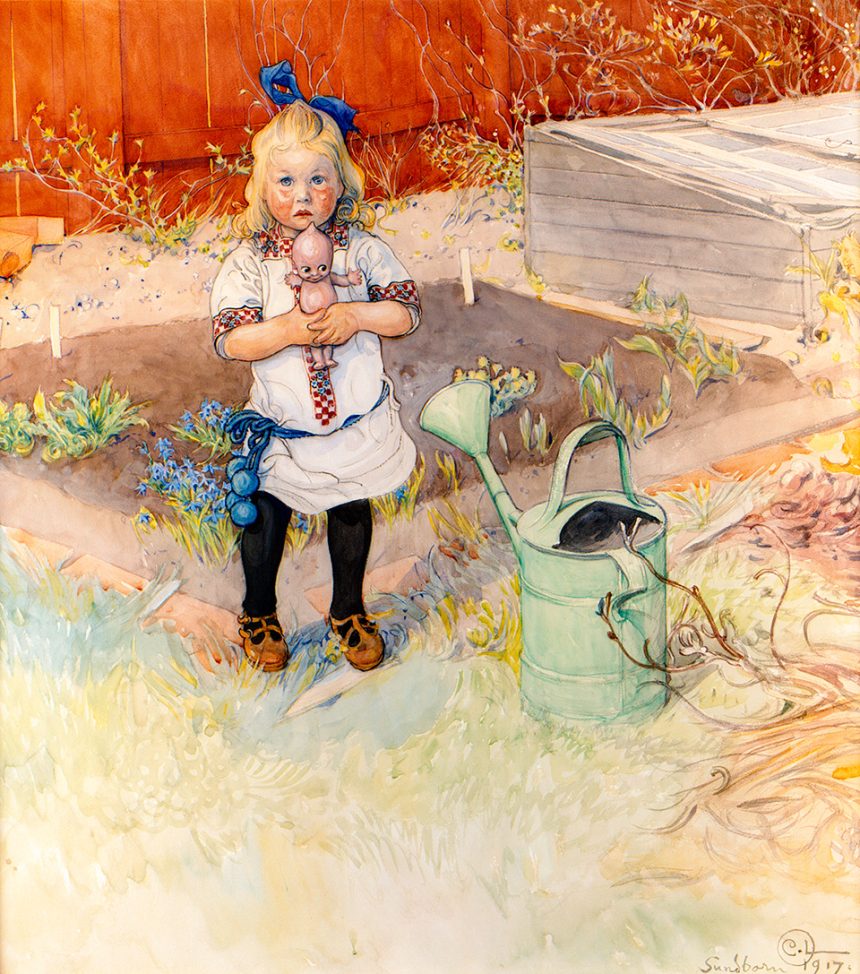
THE STRANGE DOLL. Watercolor, Carl Larsson, 1917.
The painting depicts a girl visiting Sundborn. She holds a small doll in her arms, and in front of her, a watering can remains, as if someone had just watered the plants in the background.
KERSTI’S BIRTHDAY. Watercolor, Carl Larsson, 1909.
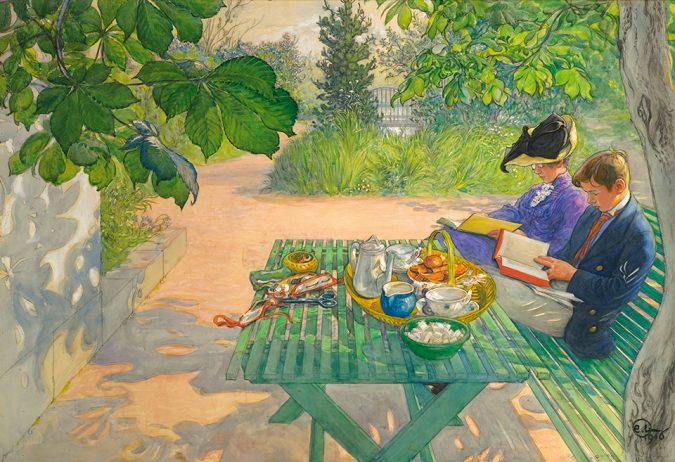
HOLIDAY READING. Watercolour, Carl Larsson, 1916.
Even in the garden, we see how Karin’s creative expression and passion for the natural take shape. For her, the garden becomes more than just a place for plants and flowers. It is an extension of her artistic world. In this earthy, fragrant environment, she explores colors, forms, and patterns. Here in the garden, surrounded by its floral splendor, she creates a place for relaxation, creativity, and family togetherness.
PHOTO: Carl Larsson-gården, 1904.
Brita, Lisbeth, Olga Palm, and Kersti gather around the table in the sunny garden. It is set for soup, and they read from a paper together – perhaps a list of expected guests. Summer at Lilla Hyttnäs flourishes around them.
PHOTO: Carl Larsson-gården, 1904.
The Larsson family at the millstone table in the garden at Lilla Hyttnäs. Carl sits surrounded by Karin and their own children and their friends – Kersti, Pontus, Olga Palm, Esbjörn, Lisbeth, Leontine, Karin, Brita, and Carl. One of the Larssons’ dogs is also present.
Karin’s era was a time of household management, and in addition to their large family, Carl and Karin gladly hosted dinners and parties. They both enjoyed having many people around them but preferred friends to visit them rather than having to attend all sorts of parties themselves. It was not uncommon to dine outdoors in the garden. One guest thanked them with the words: “It is truly like a fairy tale to sit at Carl Larsson’s on a green meadow and drink white, summery wine.”
Carl and Karin Larsson’s wild and idiosyncratic garden was depicted in many of the artworks created by the couple, and for generations, it has influenced Swedish homes.
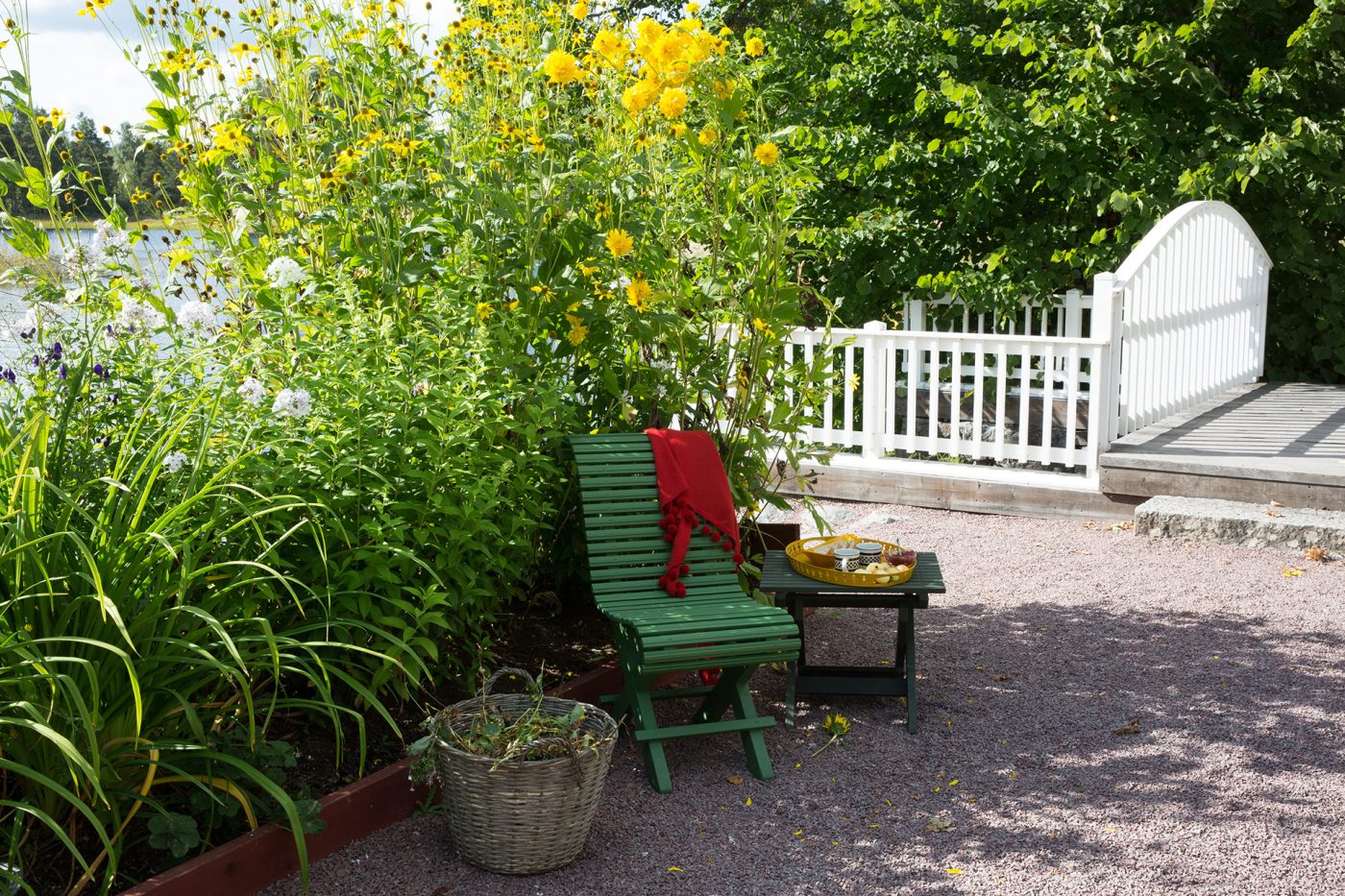
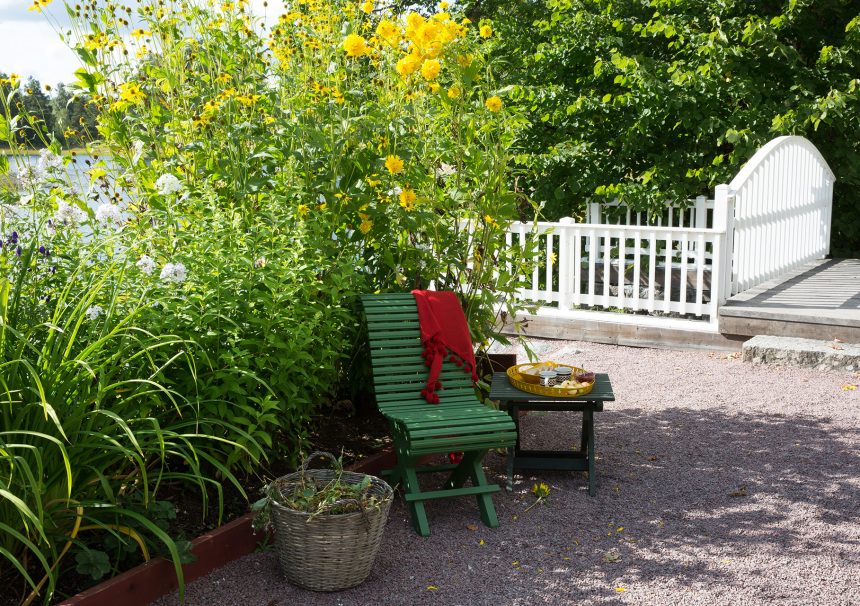
The world-renowned garden was recreated in the summer of 2014. The garden furniture in rich colors designed by Carl and Karin is back in place, and the special stone furniture that lay hidden under many layers of soil has been unearthed.
PHOTO: Carl Larsson-gården, 1907.
A summer gathering in the garden at Lilla Hyttnäs. The sun shines, and the company enjoys coffee in the shade of the trees at the back of the main house. Karin, dressed in a striped dress, serves coffee to a large group of guests. Carl stands to the right in light clothing.
SUMMER IN SUNDBORN. Watercolor, Carl Larsson, 1913.
Lisbeth sits on a red chair from the dining room. She is surrounded by the garden’s lush floral splendor at Lilla Hyttnäs. Poppies, peonies, and other summer flowers fill the flowerbed, while the white bridge and the green bench by the water draw the eye further, giving the composition its depth.
The garden is filled with a multitude of flowers, each chosen for its color, scent, and form. Roses, with both soft romantic and wilder expressions, burst forth in various shades, giving the garden a sense of timeless beauty. Poppies, with their brilliant red blooms, create contrasts and vibrant patterns. Lilies, with their large flowers, and the intense fragrance of lavender bring a sense of calm and peace. The flowers are more than just decorations; they are an important part of Karin Larsson’s life and expression. Each flower has its place in the garden and in her heart.
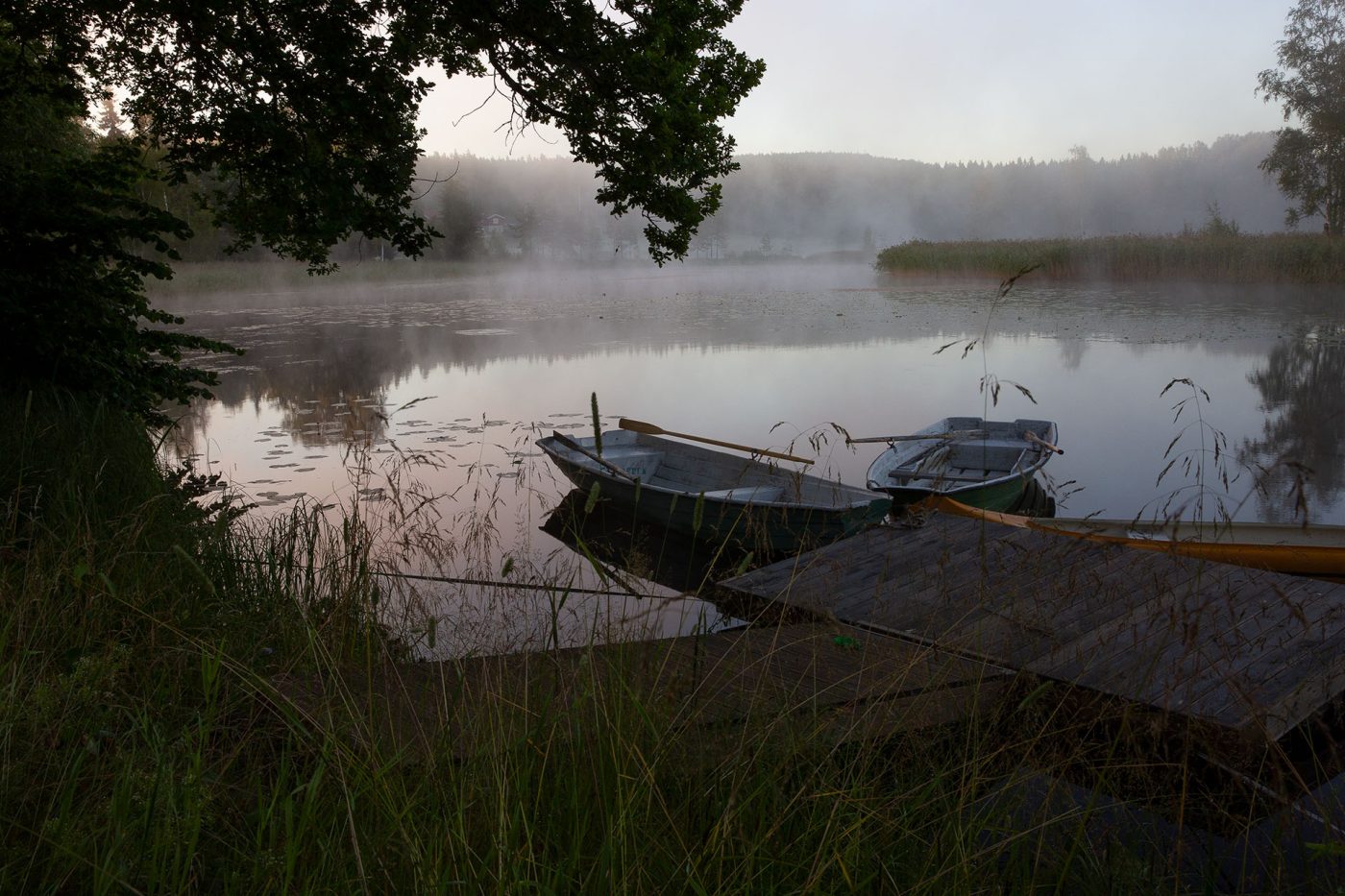
The Larsson family views Bullerholmen as an extension of the garden. They gladly bring food, plates, cutlery, and even schnapps glasses and furniture to the island to enjoy nature and escape curious visitors. There, they spend summery days together in peace and seclusion.
CRAYFISH CATCH. Watercolor, Carl Larsson, 1897.
The entire Larsson family, with Suzanne and Karin in the foreground, is gathered. The red crayfish lie on the platter, the schnapps are ready, and by the water, the children continue fishing while the traps fill in the boat. Coffee boils over the fire, bread and cheese are laid out. A tradition that lives on when the family gathers for the annual family reunion.