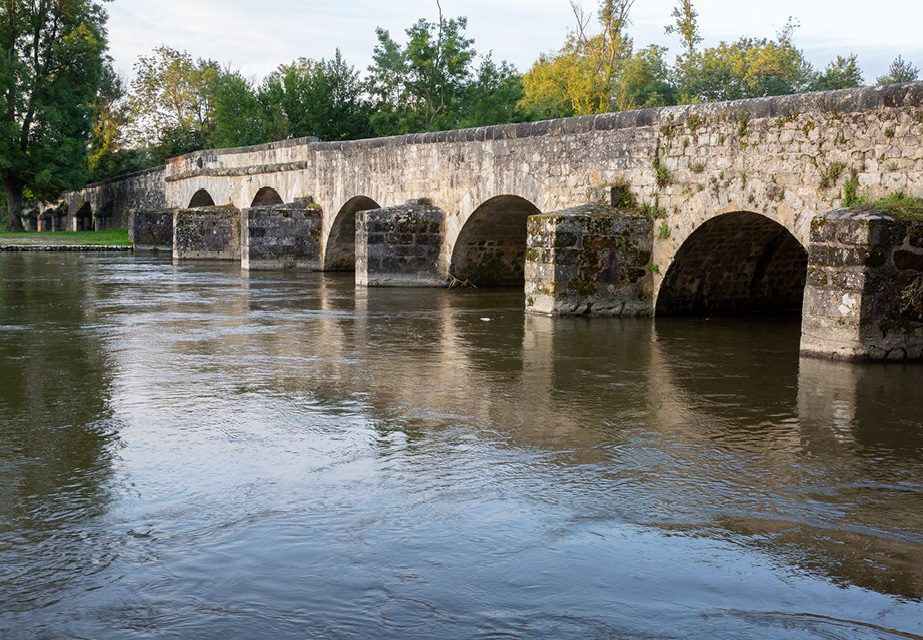
STONE BRIDGE IN GRÈZ. Oil, Julia Beck, 1885.
Carl and Karin meet in the summer of 1882 in the Scandinavian artists’ collective in the French village of Grez-sur-Loing, south of Paris. Their meeting changes their lives and Carl’s artistic path forever. Carl is a young and ambitious artist. He travels to Grez to work and find inspiration among other artists. Karin is a young woman with artistic talent from a well-to-do Swedish family. She is in Grez to develop as an artist. Her family has given her the opportunity to follow her passion.


ARTISTS’ BREAKFAST IN GREZ.
Pastel, Peder Severin Krøyer, 1884.
ARTISTS’ BREAKFAST IN GREZ. Pastel, Peder Severin Krøyer, 1884.
Peder Severin Krøyer’s pastel painting depicts a group of artists gathered around a breakfast table in the artists’ colony of Grez-sur-Loing. Carl Larsson is seated on the right of the picture, while Karin Bergöö is seen with her back to the viewer.
The small French village teems with artistic life. Swedish, British and American painters work side by side. They seek the light, nature and the simple life in the countryside. For them, Grez becomes a refuge from the city studios.
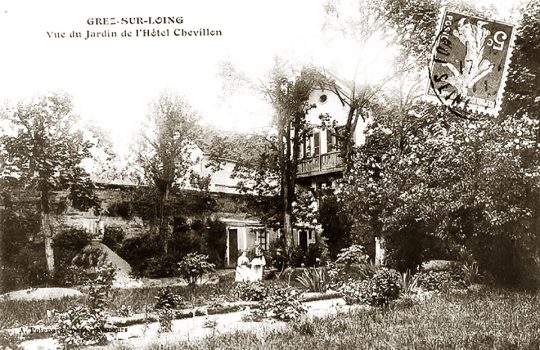
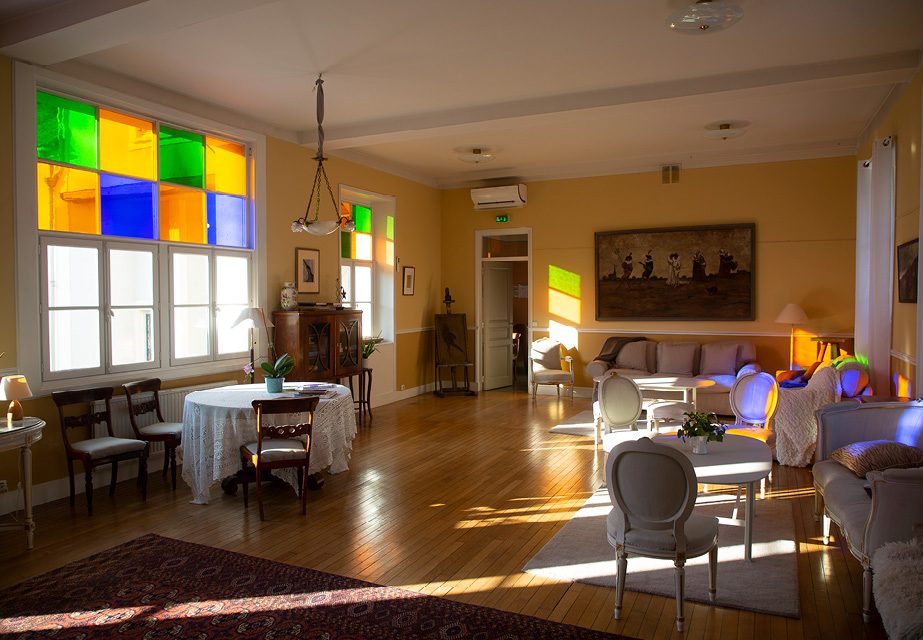
The artists live simply at the Hôtel Chevillon inn. The rooms are small and the walls thin, but the atmosphere is lively. They paint outdoors, talk and share ideas. Friendships and artistic visions take shape here. The dining room walls are adorned with sketches and paintings. Evenings are filled with discussions about art and the future.
SUMMER IN GREZ. Oil, Carl Larsson, 1882.
It is in Grez that Carl Larsson paints his first watercolours. Meeting Karin in Grez means a great deal for his life and artistic development. Karin, herself an artist, becomes his source of inspiration and creative partner. “Summer in Grez” is one of the last oils he painted in Grez.
KARIN BY THE BANKS OF THE LOING. Watercolour, Carl Larsson, 1883.
“Karin by the Banks of the Loing”, a watercolour painted by a man in love. He captures a quiet moment during their time in Grez-sur-Loing.
The summer of 1883 in Gréz-sur-Loing. Carl Larsson writes about life among artist friends, swimming, festivities and artistic dreams. The letter is written to fellow artist Ernst Josephson – from the time just before Carl meets his future wife Karin.
It is here in Grez that a strong love blossoms. At the same time, they are united by trust and understanding on an artistic level. When Carl declares his love for Karin, she replies that he should first ask her parents. In a letter dated 12 September 1882, Carl writes:
“Mr and Mrs Bergöö. I will make the agony brief: I love your daughter! Any superlatives to express the degree of my love are unnecessary when I say that I love her as an honourable man should love an honourable girl.”
They marry at Adolf Fredrik Church in Stockholm in 1883. After the wedding lunch at Hasselbacken, they return immediately to Grez, and the newlyweds are welcomed with great festivities in the village. Their time in Grez is a period of creative flourishing for them both, and their love grows.
In August 1884, their first child, Suzanne, is born. Carl writes to August Strindberg in a letter.
“Never have I loved my wife as I do now: she is to me something holy and remarkable. And the child is magnificent, you see! It already has character.”
When they return to Sweden in May 1885, their life together continues. Their home, shared life and artistic partnership become among the most famous and beloved in Swedish cultural history.
THE BRIDE. Watercolour, Carl Larsson, 1883.
Karin in her wedding dress in the garden in Grez-sur-Loing. Carl describes their meeting: “Then the great thing happens. Then came the most important turning point of all, now Karin came!”
MÈRE MOROT. Watercolour, Karin Bergöö 1882.
OCTOBER. Watercolour, Carl Larsson, 1882.
In 1882, Carl and Karin Larsson each paint a watercolour with the motif “Mère Morot” in Grez-sur-Loing, France. The motif shows a woman with a basket among pumpkins in a lush garden. Karin’s version is characterised by bright colours and soft brushstrokes. Carl’s version is awarded a medal at the Paris Salon in 1883. The French state purchases the painting.
In addition to “Mère Morot”, Carl also paints the watercolour “October” during the same period. A work that, like “Mère Morot”, captures the light and colours of autumn with great sensitivity and rich detail.
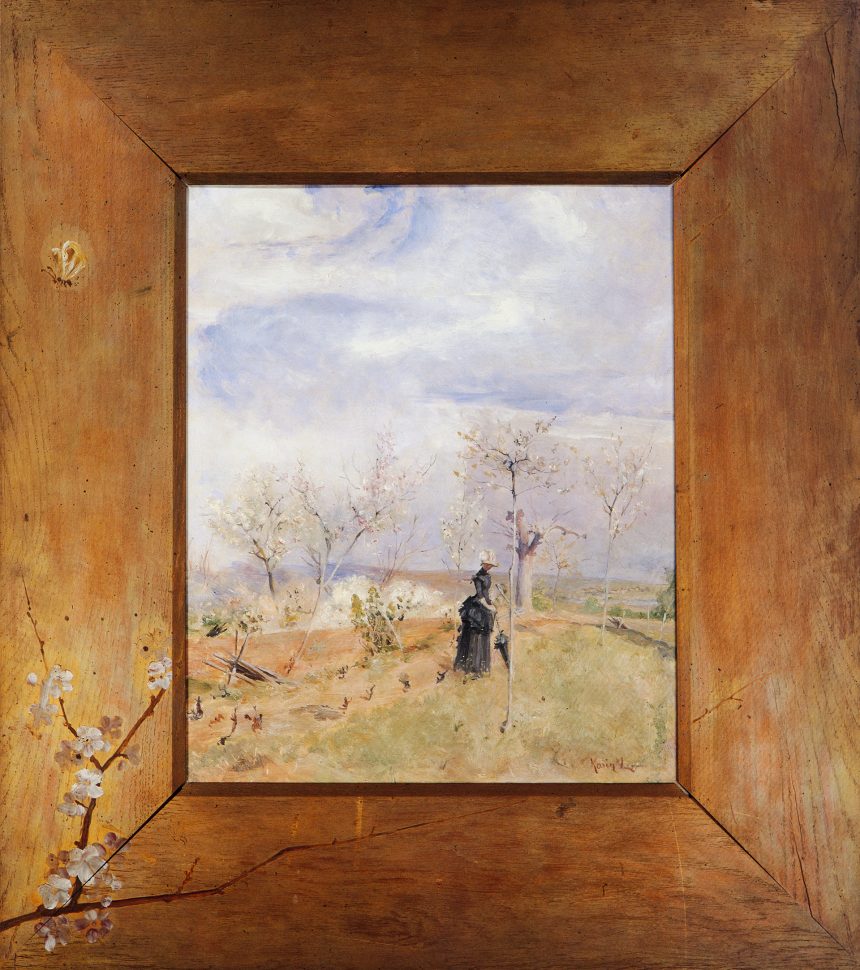
CHERRY BLOSSOM. Watercolour, Karin Larsson, 1884.
Karin paints “Cherry Blossom” with a flowering cherry branch directly on the frame. The painting becomes a significant memento from Grez-sur-Loing, the place Karin describes as the happiest time in her life. It is in Grez that Carl says for the first time that he loves her. Carl paints the same motif in a watercolour in 1884.
Hôtel Chevillon in Grez-sur-Loing becomes a second home for Carl Larsson. Here, Nordic artists such as Karl Nordström, Nils Kreuger, Georg Pauli, Emma Löwstedt, Julia Beck and Karin Bergöö meet. August Strindberg describes life at the boarding house as exceptionally simple and unconventional.
After their marriage, Carl and Karin rent the summer pavilion in Chevillon’s garden. Grez marks a turning point in Larsson’s artistry. His painting becomes fresher and airier, and he remains faithful to the watercolour’s distinctive means of expression. Today, his memory is honoured with “Rue Carl Larsson”. Each year, the Carl Larsson House awards a scholarship to Swedish artists for a stay in Grez-sur-Loing.