




TO A LITTLE VIRA. Oil, Carl Larsson, 1901.
The interior of Lilla Hyttnäs develops through close collaboration between Carl and Karin Larsson. Carl paints, Karin shapes the interior with textiles, embroideries, flowers, and color. Her designed furniture, such as the rocking chair and the flower stand, contributes to the overall work. Together they develop a style that is personal, bright, and modern. Through Carl’s watercolors, Karin’s creations are documented and spread far beyond Sundborn. Many travel here to experience the home where everyday life and art, warmth and community merge.


“If one wishes to see a home which, with simple means, has achieved the most homely and original artistic impression, one should visit the painter Carl Larsson up in Sundborn.”
Ellen Key, Beauty for All, 1899.
Lilla Hyttnäs in Sundborn is Carl and Karin Larsson’s life project—it is both home and work of art. Here the rooms are filled with light and balance function, comfort, and personal style. Karin’s hand-woven curtains, embroideries, and textiles meet Carl’s paintings of family life and everyday scenes.
Creativity and sustainability permeate every room—new, inherited, and repurposed items are mixed with handmade details. Japanese woodcuts, contemporary art, and custom-designed furniture give the home a modern, international feel. Textile, painting, and design are woven together into a whole.
Lilla Hyttnäs is more than a home—it is a living work of art. Here Carl and Karin realize their vision of the good life, where light, warmth, and creative joy turn everyday life into art.



SELF-PORTRAIT. Watercolor, Carl Larsson, 1895.
A self-portrait in which Carl Larsson intently observes his model while one of his daughters peers out from behind him.
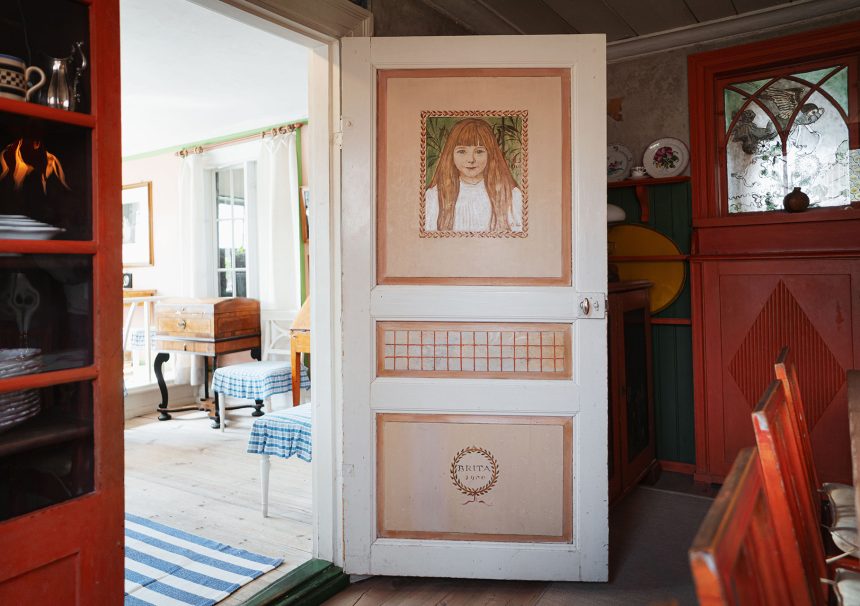
Carl Larsson’s paintings fill the entire home—watercolors and oil paintings depict everyday life, family, home, and fantasy with strong contours and decorative, playful details. His paintings are everywhere, from the porcelain service to the window facing the workshop showing Carl and Karin in Grez-sur-Loing, and on door paintings with portraits of Karin, Brita, Esbjörn, and Kersti. The interior follows the house’s development as the family grows.
In the long corridor to the studio hang works of various kinds—gifts from artist friends and paintings Carl collects on his travels. Here one can see, among other things, etchings by Anders Zorn and an oil painting by Bruno Liljefors. The entire eastern wall of the studio is covered by a sketch for the mural “Korum at Ladugårdsgärdet.”
Carl is strongly inspired by Japanese aesthetics and collects Japanese woodcuts. In the reading room they sit in a row on the ceiling and can be changed for new inspiration. Although Carl never visits Japan, he calls the country his “foster land” as an artist. The influences are visible in several of his motifs.

STAR BOYS II. Watercolor, Carl Larsson, 1904.
The Lucia boys sing for the Larsson family in the dining room at Lilla Hyttnäs. Karin and Carl, along with the small child, are colored to create depth in the image. One can imagine that it is dark in the room, where the other figures appear as shadow-like silhouettes, partially hidden in the dim light.

PORTRAIT OF CARL AND KARIN.
Painted on porcelain plates, George Pauli, 1883.
PORTRAIT OF CARL AND KARIN. Painted on porcelain plates, George Pauli, 1883.

LETTER WRITING. Watercolor, Carl Larsson, 1912.
Ingrid, daughter of one of the family’s employees, sits at Karin’s desk in the upper hall at Lilla Hyttnäs and writes a letter. Behind her stands the green flower stand with its potted plants at different levels, a practical construction by Karin that gives all the plants space by the window.
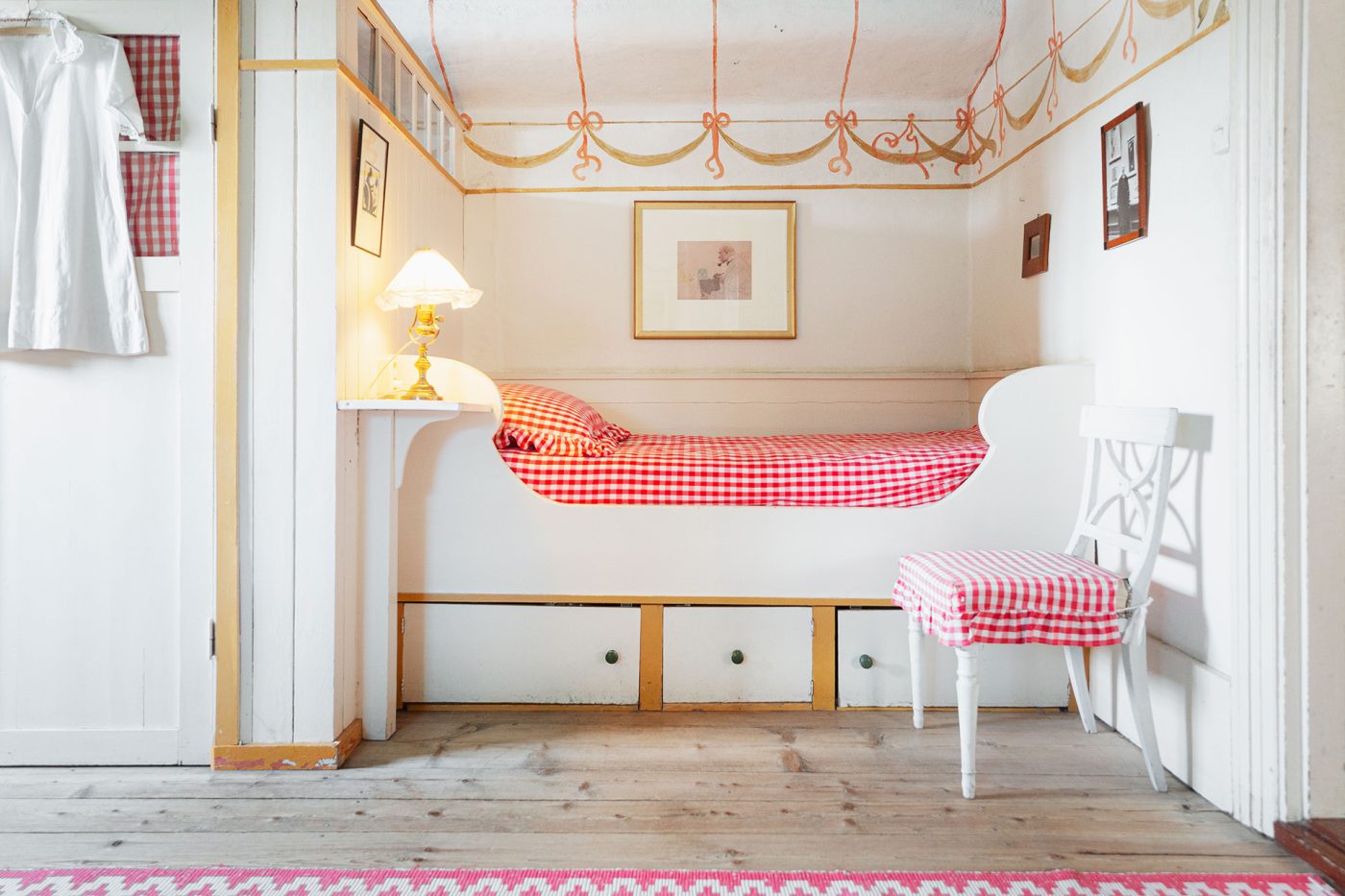
Every piece of furniture at Lilla Hyttnäs is selected and shaped for both function and beauty. Built-in sofas, beds, bookshelves, and interior details solve everyday needs while simultaneously becoming artistic expressions.
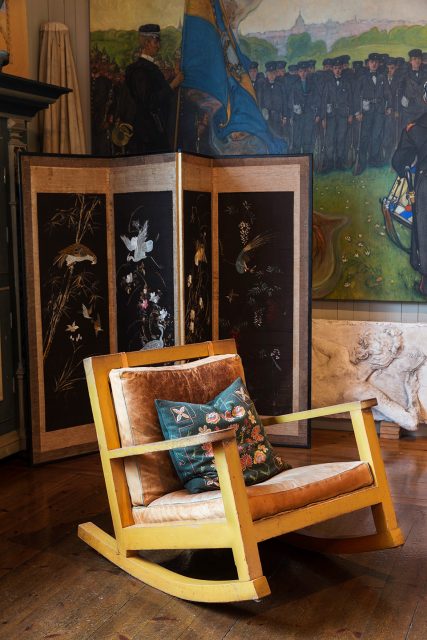
Karin’s rocking chair, the flower shelf in the writing corner filled with geraniums in clay pots, and the built-in beds with smart storage underneath—all demonstrate her ability to combine aesthetics and function. In a home with eight children, this is essential.
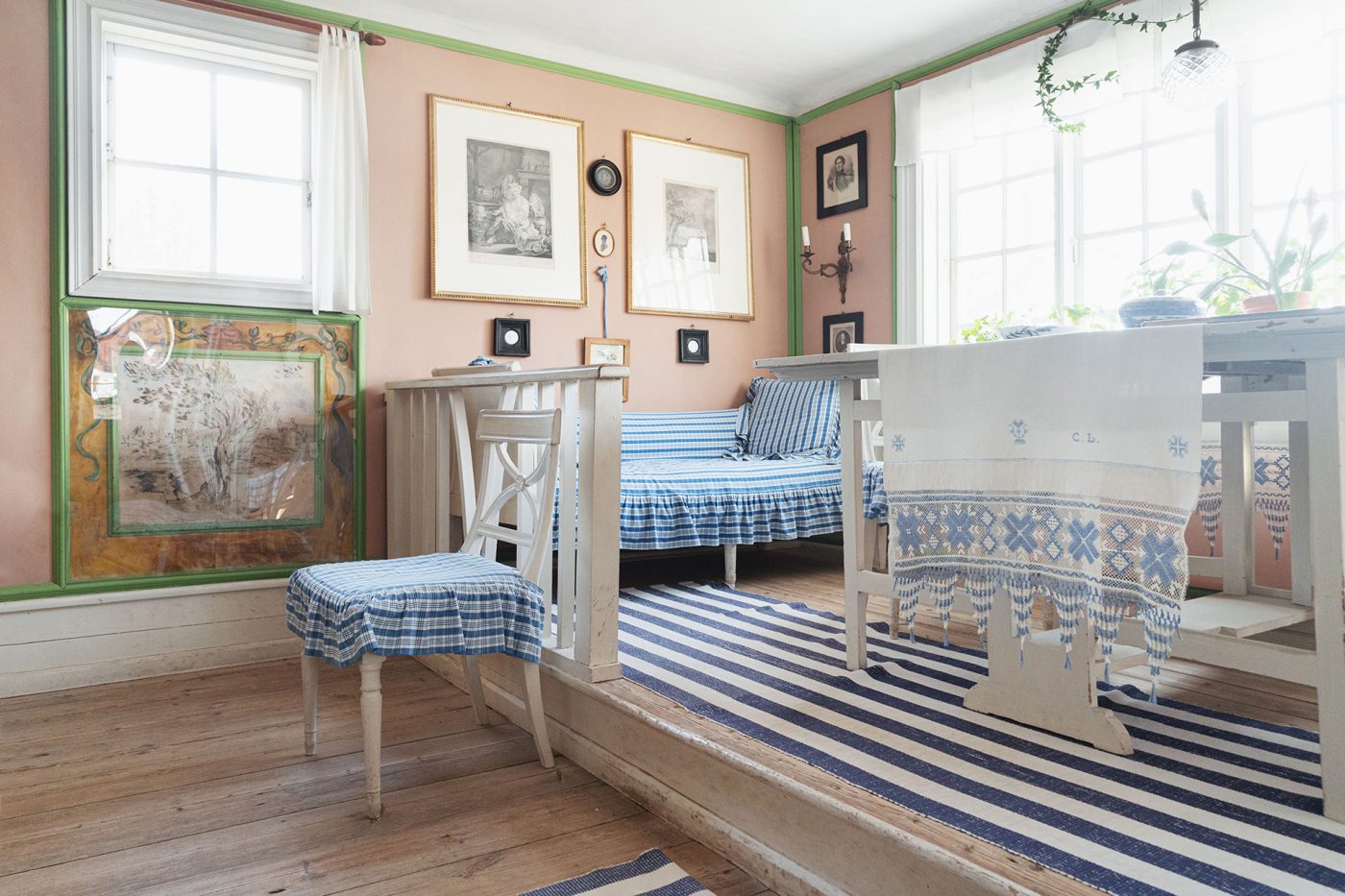
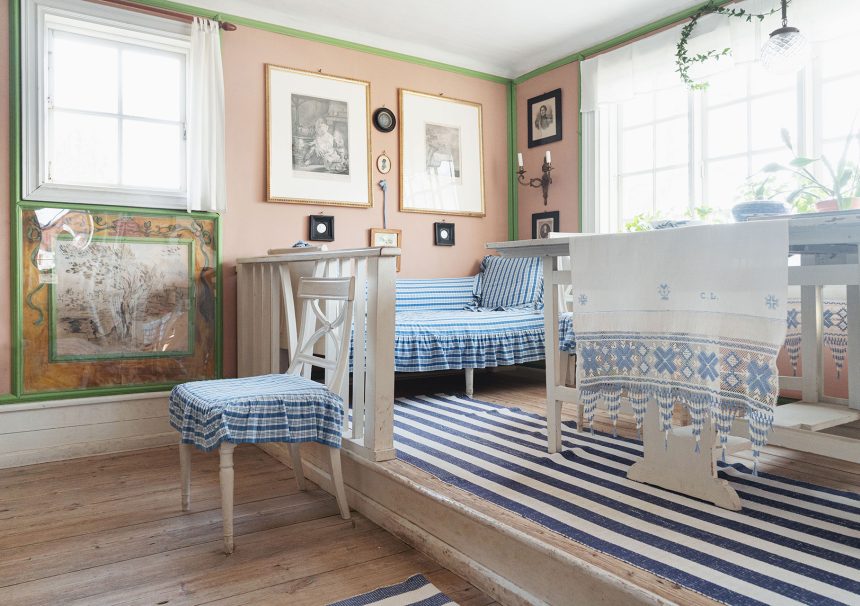
The furniture offers small surprises and ingenious details: a built-in brush cabinet in the pillar by the sofa in the workshop, raised sewing corners with looms underneath, level differences in floors and stairs that create both sightlines and playfulness, and window shutters that gain new life from previous rooms.

THE GRANDCHILD. Watercolor, Carl Larsson, 1918.
Carl and Karin’s first grandchild Gunlög, daughter of Suzanne, peers out from behind a red pillar in Karin’s studio at Lilla Hyttnäs. Karin’s workspace is located on a raised platform, both for the sake of light and to give her a view over the yard and garden where she can follow daily life.

HILDA. Watercolor, Carl Larsson, 1911.

SEWING GIRL. Watercolor, Carl Larsson, 1911.
Karin’s flower arrangements are a natural part of the home—both as decoration and as an expression of everyday life. Her carefully arranged flowers are innovative and beautiful potted plants fill windowsills, tables, and shelves and bring life, color, and harmony to the rooms. Even today the tradition continues—the current housekeeper creates flower arrangements that follow the seasons with flowers and plants from the garden.
The flowers also become central to Carl Larsson’s artistic world. In many of his watercolors and paintings from Lilla Hyttnäs, Karin’s arrangements are visible, often as a natural part of the scene. The motifs show both the family’s everyday life and quiet moments in the home, where the flowers provide character and warmth.
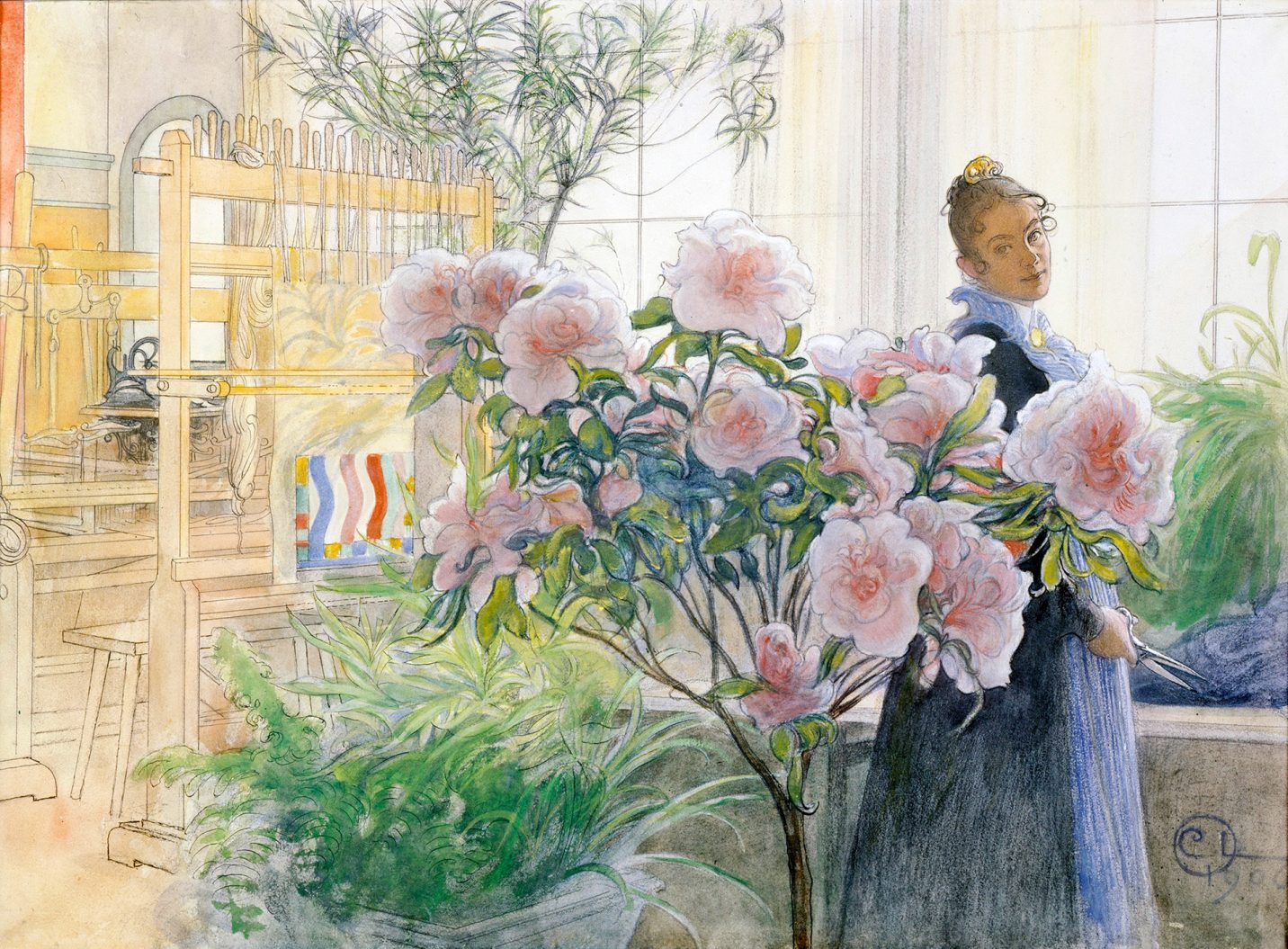
AZALEA. Watercolor, Carl Larsson, 1906.
The home in Sundborn is a creative universe. Karin moves through the room with scissors in hand, captured in the midst of creation. The magnificent azalea fills the foreground, while the loom is visible in the background—in what was once Carl Larsson’s studio. She looks directly at Carl.
Karin’s hand-woven textiles and embroidered works give each room at Lilla Hyttnäs its own character and warmth. They meet Carl’s paintings, the built-in furniture, and the flower arrangements—together they create a living work of art where everyday life and creativity meet.
Her tapestry “Pegasus” adorns a door panel in the large studio and creates, together with Carl’s paintings, an artistic interplay throughout the home. Between Carl and Karin’s bedrooms hangs the tapestry-woven drapery “The Rose of Love”—a masterpiece of symbolism and color, a gift of love to Carl. On Carl’s built-in bed in the middle of the room lies the Sundborn blanket, whose pattern Karin creates so that the women of Sundborn can weave and sell. Around the bed are cushions in the same style and Karin’s embroidered cloth with red circles and arrows. In the dining room, the tapestry “The Four Elements” adorns the backrest of the built-in sofa. The sunflower cushion spreads color and life. In the workshop, Karin weaves the chair seats in minimalist rölakan.