FISHING VILLAGE IN THE FJÄLLBACKA REGION. After Alfred Wahlberg’s painting. Oil, Karin Bergöö, 1890.
Karin, born Bergöö, shows artistic talent early and trains in Stockholm at the Royal Academy of Fine Arts and later in Paris. In 1882 she meets Carl in Grez-sur-Loing and love blossoms; the following year, 1883, they marry in Stockholm. When their daughter Suzanne is born in August 1884, Karin puts her brushes aside. She writes to Carl: “Dear big silly! Thank God I came up with the idea of getting engaged to you. It’s the best thing I could have done to get away from that blessed painting. I’ve been in the studio all day painting and painting (up the walls of course, while thinking about completely different things). It’s a shame and a disgrace to stand there wasting so much time and paint.”
ARTISTS’ BREAKFAST IN GREZ. Pastel, Peder Severin Krøyer, 1884.
ARTISTS’ BREAKFAST IN GREZ.
Pastel, Peder Severin Krøyer, 1884.
Peder Severin Krøyer’s pastel painting “Artists’ Breakfast in Grez” from 1884 depicts a group of artists gathered around a breakfast table in the artists’ colony of Grez-sur-Loing. Carl Larsson sits on the right side of the image, while Karin Bergöö is seen with her back to the viewer.


PHOTO: Carl Larsson House.
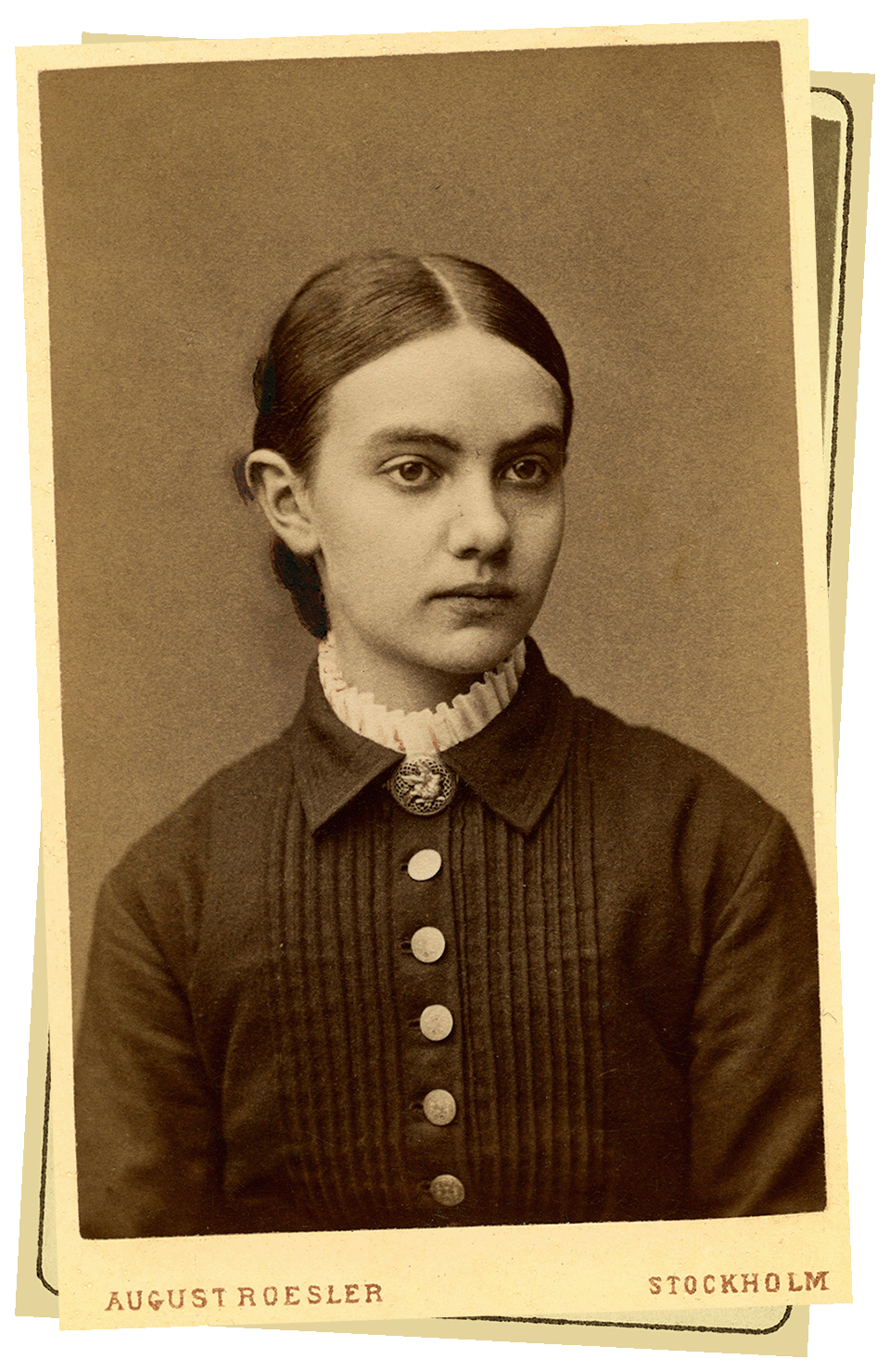
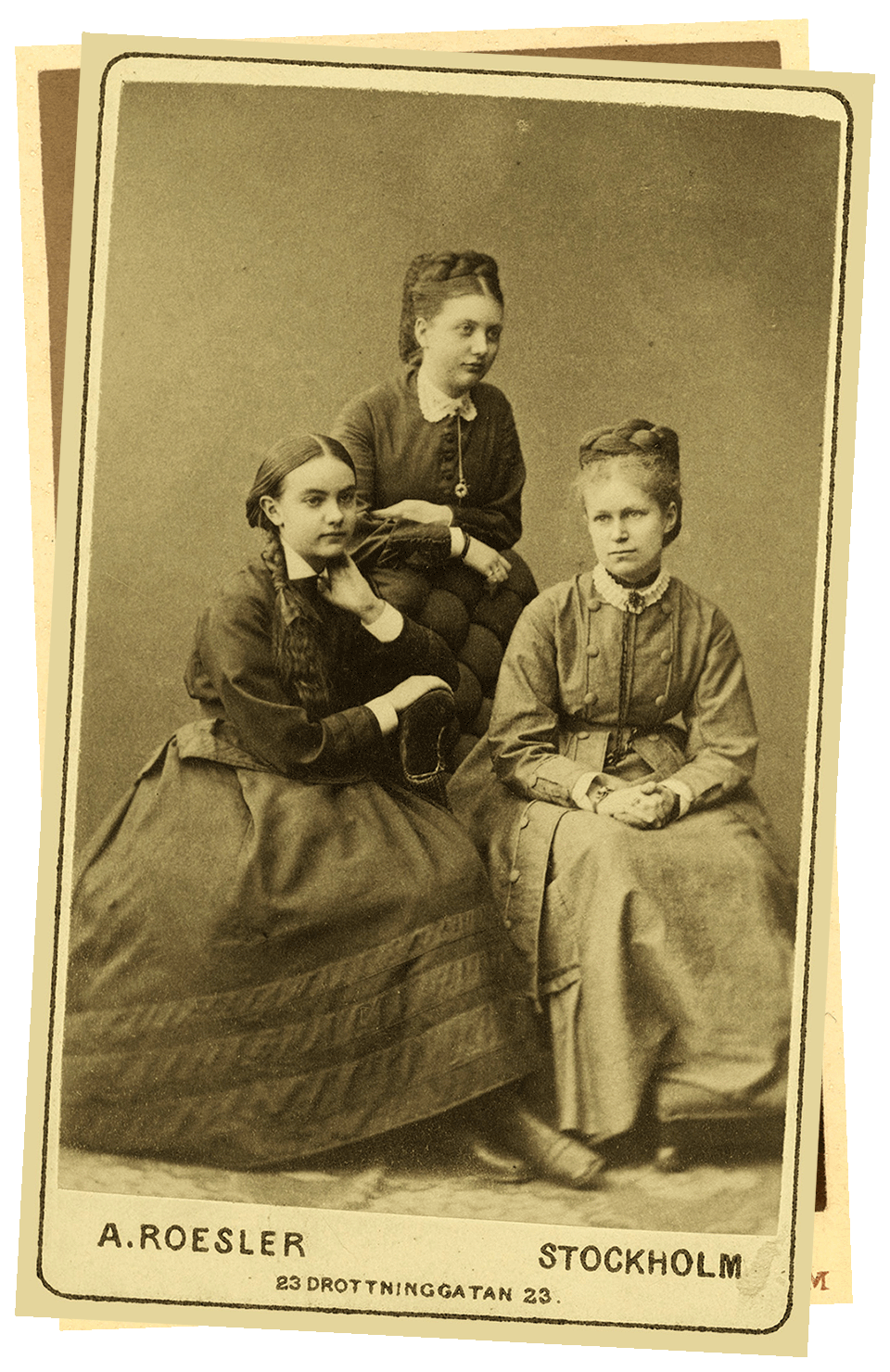
Karin, 14 years old, on the left, together with Sophie Flach and Julia Carlsson in her lodging home on Klara Norra Kyrkogata in Stockholm. On October 1, 1873, she begins at the School of Arts and Crafts—with instruction ten hours a day, seven days a week.
During the latter part of the 19th century, several educational institutions for women open, and Karin is sent at the age of fourteen in 1873 to the School of Arts and Crafts in Stockholm. It is a vocational school focusing on arts and crafts and design. She attends the French School in parallel, but the School of Arts and Crafts is closest to her heart. The years at the School of Arts and Crafts give Karin a versatile artistic and technical foundation.
In 1877 she enrolls at the Royal Academy of Fine Arts—the first art school in Europe to offer women art education. After nearly four years at the Royal Academy of Fine Arts, Karin leaves Stockholm. At twenty years of age, she travels through Europe to Paris with her artist friends Anna Nordgren, Julia Beck, and Hildegard Nordberg. There she begins studying at Colarossi’s renowned art school.
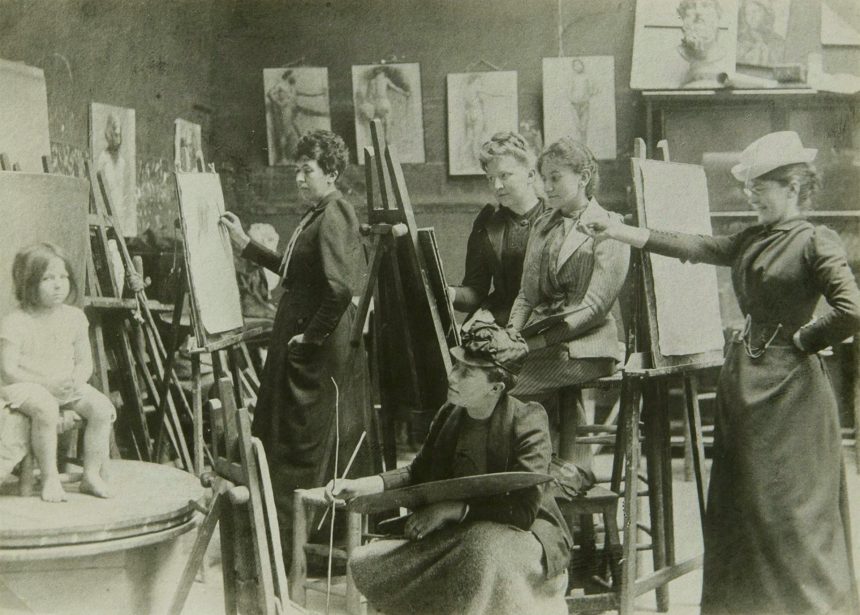
ACADÉMIE COLAROSSI. Photographer unknown, ca. 1892.
Académie Colarossi, Paris, circa 1892. Karin Bergöö Larsson studies at the progressive art school together with Anna Nordgren, Julia Beck, and Hildegard Nordberg from 1881. The school gives female students the same opportunities as male students, which is unusual during the 1880s when most art academies exclude women.
SUMMER DAY, KARIN AND BRITA IN THE GARDEN. Watercolor, Carl Larsson, 1911.
SUMMER DAY, KARIN AND BRITA IN THE GARDEN.
Watercolor, Carl Larsson, 1911.
“Summer Day, Karin and Brita in the Garden.” The painting is used as a poster motif for the exhibition “Carl Larsson: Artist and Designer” at the Victoria & Albert Museum in London in 1997. It is in connection with this exhibition that Karin Larsson achieves her major breakthrough and recognition as an artist. The exhibition highlights her as a significant designer and artist in her own right and attracts great international attention to Karin Larsson’s innovative and modern expression.
Despite what Karin herself writes to Carl, one can assume that she makes a significant sacrifice when she puts her painting career aside. Her creativity finds expression as a textile artist. Carl Larsson emphasizes Karin’s decisive role in his artistry—how she inspires him to adopt the bright color palette that becomes his signature.
Today Karin has received recognition as an artist. The major breakthrough comes after her death in connection with the exhibition “Carl Larsson: Artist and Designer” at the Victoria & Albert Museum in London in 1997. The exhibition highlights not only Carl but also Karin as a significant artist. Through the exhibition, Karin’s art and design receive great international attention.
There are not many preserved paintings by Karin. The most famous work is “Pettersson,” which depicts a man in an everyday setting. She portrays Pierre Louis Alexandre with great care and places him close to the viewer, while his gaze is distant and his thoughts feel far away.
PIERRE LOUIS ALEXANDRE (Pettersson). Oil, Karin Bergöö, 1879.
Pierre Louis Alexandre, a dock worker from French Guiana, works as a model at the Royal Academy of Fine Arts in Stockholm during the 1880s, where he is depicted by several artists. Karin’s portrait shows technical maturity and has a well-balanced composition. She demonstrates her ability to portray psychological presence and human dignity. The painting is held at the National Gallery of Art in Washington, D.C.
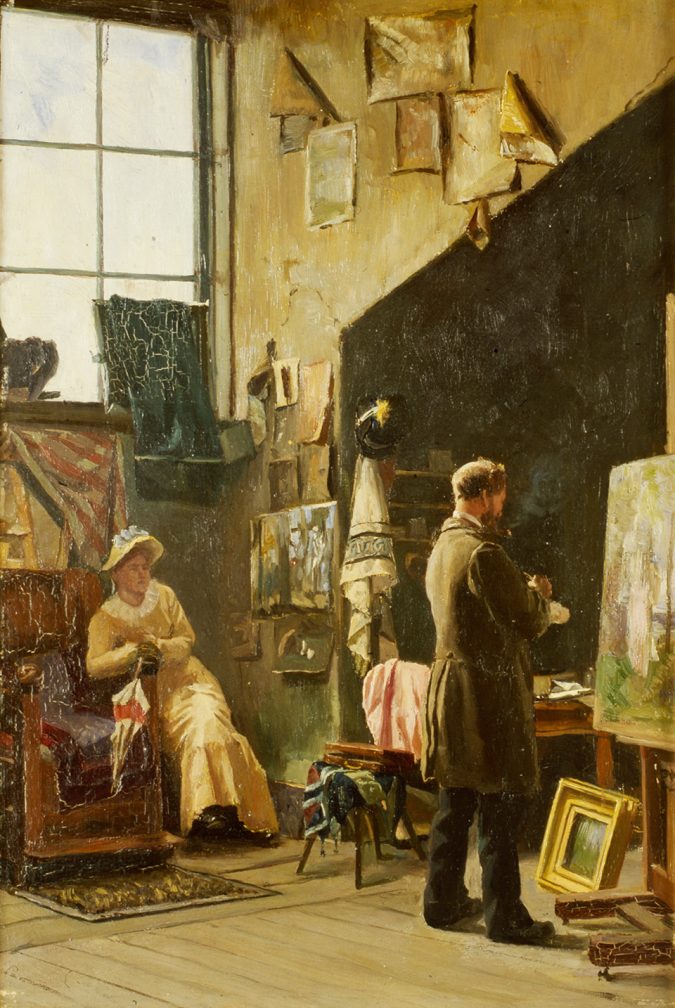
PROFESSOR MALMSTRÖM’S STUDIO. Oil, Karin Bergöö, 1877.
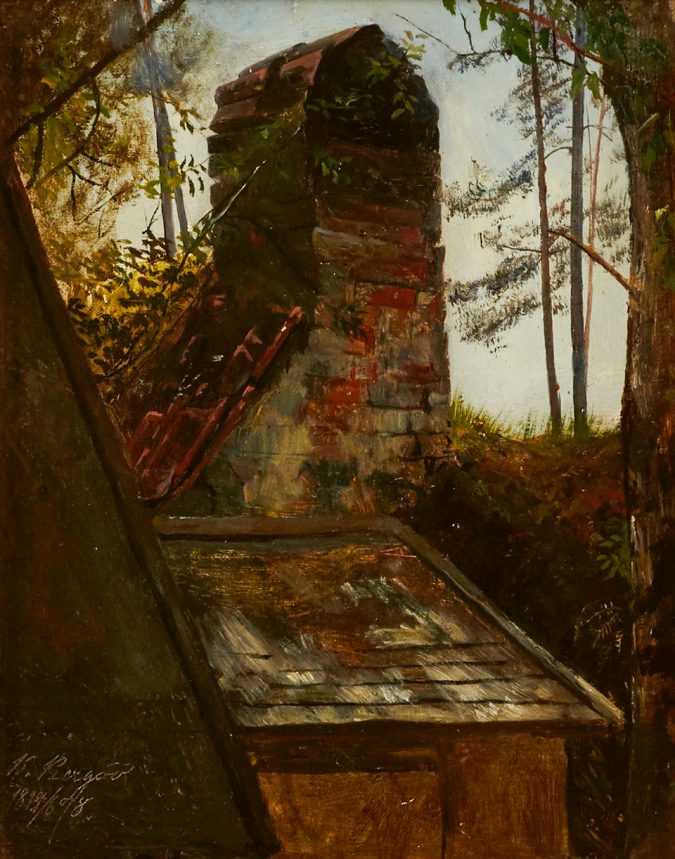
LANDSCAPE MOTIF. Oil, Karin Bergöö, 1878.
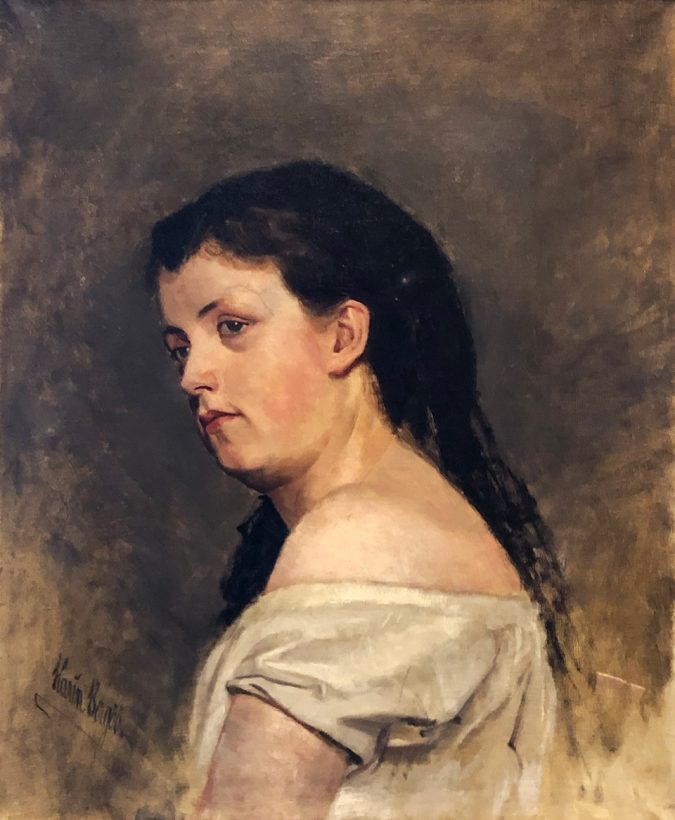
PORTRAIT OF A GIRL. Oil, Karin Bergöö, 1879.
STILL LIFE. Oil, Karin Bergöö, 1877.
The French School and the School of Arts and Crafts in Stockholm are the places where the young Karin Larsson takes her first steps as an artist. In these environments she creates several of her earliest paintings. Her artistic talent is clearly visible in these works. It is here that her unique artistic voice begins to take shape.